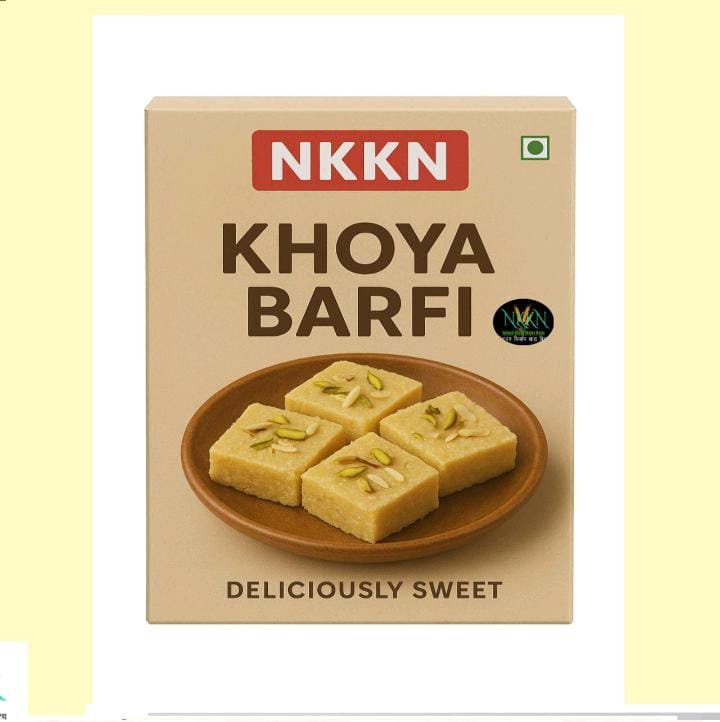
Indian sweets are more than just desserts; they are emotions, traditions, and celebrations wrapped in sugar and love. Among the many timeless mithais that have ruled Indian households for generations, Khoya Barfi holds a special place. Rich, soft, aromatic, and indulgent, this sweet represents purity and authenticity in every bite.
At NKKN, we believe in preserving traditional flavors while maintaining the highest standards of quality and hygiene. Our Khoya Barfi is a tribute to India’s rich culinary heritage, made using premium khoya, balanced sweetness, and time-honored methods.
This blog explores everything you need to know about Khoya Barfi — its history, ingredients, preparation, varieties, nutritional value, health aspects, storage tips, and why NKKN Khoya Barfi stands out as a trusted and delicious choice.
What Is Khoya Barfi?
Khoya Barfi, also known as Mawa Barfi, is a traditional Indian sweet prepared using khoya (reduced milk solids), sugar, and flavoring agents like cardamom. The mixture is cooked slowly until it thickens, then spread into trays, allowed to set, and cut into neat square or diamond-shaped pieces.
Khoya itself is made by simmering milk for hours until most of the moisture evaporates, leaving behind a rich, creamy solid. This gives Khoya Barfi its signature melt-in-the-mouth texture and deep dairy flavor.
NKKN Khoya Barfi
NKKN Khoya Barfi
The Cultural Importance of Khoya Barfi in India
Khoya Barfi is deeply rooted in Indian culture. It is commonly prepared and shared during:
Festivals like Diwali, Holi, Raksha Bandhan, and Navratri
Weddings and engagement ceremonies
Religious offerings (prasad)
Birth celebrations and family gatherings
In many Indian households, offering Khoya Barfi symbolizes prosperity, purity, and joy. It is often gifted in beautifully packed boxes as a gesture of love and respect.
History and Origin of Khoya Barfi
The origins of Khoya Barfi can be traced back centuries to North India, where milk-based sweets flourished due to the abundance of dairy. Traditional halwais (sweet makers) perfected the art of slow-cooking milk to create khoya, which later became the base for many classic sweets like peda, gulab jamun, and barfi.
Khoya Barfi gained popularity because of its simple ingredients, rich taste, and long shelf life compared to fresh milk sweets. Over time, regional variations developed, but the essence of Khoya Barfi remained unchanged.
Ingredients Used in NKKN Khoya Barfi
At NKKN, quality begins with ingredients. We use carefully selected raw materials to ensure purity and consistency.
Core Ingredients:
Premium Khoya (Mawa) – Prepared from high-quality milk
Refined Sugar – Balanced sweetness, not overpowering
Pure Ghee – Enhances aroma and richness
Cardamom Powder – Natural flavor and fragrance
Optional Garnishing:
Chopped almonds
Pistachios
Silver leaf (varak)
No artificial flavors or unnecessary additives are used in NKKN Khoya Barfi.
How Khoya Barfi Is Traditionally Made
The preparation of Khoya Barfi is a labor of patience and skill.
Preparing the Khoya
Fresh milk is slow-cooked in heavy-bottom vessels until it thickens and reduces to khoya.
Cooking the Mixture
Khoya is heated gently with sugar and ghee, stirred continuously to avoid burning.
Flavoring
Cardamom powder is added to enhance aroma and taste.
Setting the Barfi
The thick mixture is spread evenly on greased trays.
Cutting and Garnishing
Once set, it is cut into uniform pieces and garnished with dry fruits.
NKKN follows hygienic and standardized processes to ensure every batch tastes just as authentic.
Types of Khoya Barfi
Though the classic version remains the favorite, Khoya Barfi comes in many delightful variations:
1. Plain Khoya Barfi
Pure, rich, and creamy with cardamom flavor.
2. Dry Fruit Khoya Barfi
Loaded with almonds, cashews, and pistachios for extra richness.
3. Chocolate Khoya Barfi
A modern twist combining cocoa with traditional khoya.
4. Kesar Khoya Barfi
Infused with saffron strands for royal taste and color.
5. Coconut Khoya Barfi
A fusion of khoya and desiccated coconut.
NKKN focuses on traditional recipes while also catering to evolving tastes.
Taste and Texture Profile
A perfect Khoya Barfi should be:
Soft yet firm
Rich and creamy
Mildly sweet
Aromatic with cardamom
Non-grainy texture
NKKN Khoya Barfi melts smoothly in the mouth, leaving behind a lingering dairy richness that feels indulgent but comforting.
NKKN
NKKN
Nutritional Value of Khoya Barfi
Khoya Barfi is an energy-rich sweet due to its milk base.
Approximate Nutritional Values (per 100g):
Calories: 420–450 kcal
Protein: 12–14 g
Fat: 22–25 g
Carbohydrates: 40–45 g
Calcium: High
Sugar: Moderate to high
Because it is milk-based, Khoya Barfi also provides essential nutrients like calcium and protein.
Health Benefits of Khoya Barfi (When Consumed in Moderation)
While it is a sweet treat, Khoya Barfi does offer some benefits:
Good source of energy
Supports bone health due to calcium
Provides protein for muscle repair
Improves mood and satisfaction
Ideal festive indulgence
However, moderation is key, especially for people managing sugar intake.
Shelf Life and Storage Tips
Proper storage helps maintain freshness and taste.
Storage Guidelines:
Store in an airtight container
Keep in a cool, dry place
Refrigeration extends shelf life
Avoid exposure to moisture
Shelf Life:
At room temperature: 2–3 days
Refrigerated: Up to 7–10 days (depending on preparation)
NKKN ensures hygienic packaging to maximize freshness.
Why Choose NKKN Khoya Barfi?
NKKN is committed to delivering authentic Indian flavors with modern quality standards.
What Makes NKKN Special:
High-quality milk-based khoya
Traditional preparation techniques
No compromise on hygiene
Balanced sweetness
Consistent taste and texture
Trusted brand values
Every piece of NKKN Khoya Barfi reflects purity, tradition, and care.
Occasions Perfect for Khoya Barfi
Khoya Barfi fits every celebration:
Diwali gift boxes
Wedding return gifts
Festive prasad
Family gatherings
Corporate gifting
Daily sweet cravings
Its universal appeal makes it a safe and loved choice for all age groups.
Khoya Barfi as a Gift Item
Because of its classic nature and premium feel, Khoya Barfi is one of the most gifted Indian sweets. When packed elegantly under the NKKN brand, it becomes a thoughtful and tasteful present that represents Indian culture and hospitality.
Modern Demand and Market Popularity
With growing demand for traditional sweets, Khoya Barfi continues to enjoy strong market presence. Consumers today seek:
Authentic taste
Clean labeling
Trusted brands
Hygienic packaging
NKKN fulfills all these expectations while staying rooted in tradition.
How NKKN Maintains Quality and Hygiene
NKKN follows strict quality checks at every stage:
Controlled sourcing of milk and khoya
Clean production environment
Trained food handlers
Standardized recipes
Proper storage and packaging
This ensures safety, taste consistency, and customer trust.
Frequently Asked Questions (FAQs)
Is Khoya Barfi vegetarian?
Yes, it is completely vegetarian.
Can diabetic patients consume Khoya Barfi?
Only in very small quantities and after consulting a doctor.
Does NKKN Khoya Barfi contain preservatives?
No unnecessary preservatives are used.
Is it suitable for children?
Yes, when consumed in moderation.
Final Thoughts
Khoya Barfi is not just a sweet; it is a symbol of Indian tradition, warmth, and celebration. Its rich milk flavor, soft texture, and timeless appeal make it one of the most loved mithais across generations.
At *NKKN, we take pride in offering Khoya Barfi that stays true to its roots while meeting modern expectations of quality and hygiene. Whether you are celebrating a festival, gifting loved ones, or simply satisfying a sweet craving, *NKKN Khoya Barfi promises purity, taste, and trust in every bite.
Leave a Reply